The Ultimate Ant Keeping Beginner Guide: How to Start Your First Colony the Right Way | AntopiaUSA
# The Ultimate Ant Keeping Beginner Guide: How to Start Your First Colony the Right Way | AntopiaUSA
Starting your ant keeping journey can feel overwhelming with so many species, products, and conflicting advice online. As someone who's been keeping ants for the better part of a decade and helping thousands of beginners through AntopiaUSA, I've seen the same mistakes repeated countless times. This ant keeping beginner guide will walk you through everything you need to know to start your first colony successfully, avoiding the pitfalls that derail most new keepers.
The biggest setback I see among new keepers isn't choosing the wrong species—it's selecting high-maintenance equipment designed for experienced keepers or buying from manufacturers who've never actually kept ants themselves. At AntopiaUSA, we've been USDA-APHIS licensed ant keepers for years, and every product we sell has been battle-tested in our own colonies first. Trust me, we've learned the hard way what works and what doesn't!
## Choosing the Best Ant Species for Beginners: Your First (and Most Important) Decision
When selecting your first species, simplicity trumps excitement every single time. I cannot stress this enough! Native North American species offer the perfect combination of hardiness, availability, and ease of care that will set you up for success rather than heartbreak.
Here are the game-changing characteristics that make certain species absolute goldmines for beginners:
Simple diets: Species that happily munch on common foods like honey, sugar water, and basic protein sources eliminate the nerve-wracking guesswork of specialized feeding. No hunting for exotic foods or breaking the bank on specialty supplements!
Moderate growth rates: Fast-growing colonies can explode and outgrow their space overnight (trust me, I've been there), while extremely slow species will test even the most patient beginner's resolve.
Readily available queens: Starting with healthy, mated queens from reputable sources like AntopiaUSA ensures your colony has the absolute best chance of thriving from day one.
Some spectacular beginner-friendly native species include various Camponotus (carpenter ants), Tetramorium, and for those seeking something truly extraordinary, Myrmecocystus placodops (honeypot ants). Honeypot ants were once considered one of the most challenging species to raise in captivity—a nightmare for beginners! But our innovative nest design and years of dedication completely changed that game. Ant keepers of ANY experience level can now achieve incredible success with these absolutely stunning ants.
## How to Start an Ant Colony: The Foundation Phase That Makes or Breaks Everything
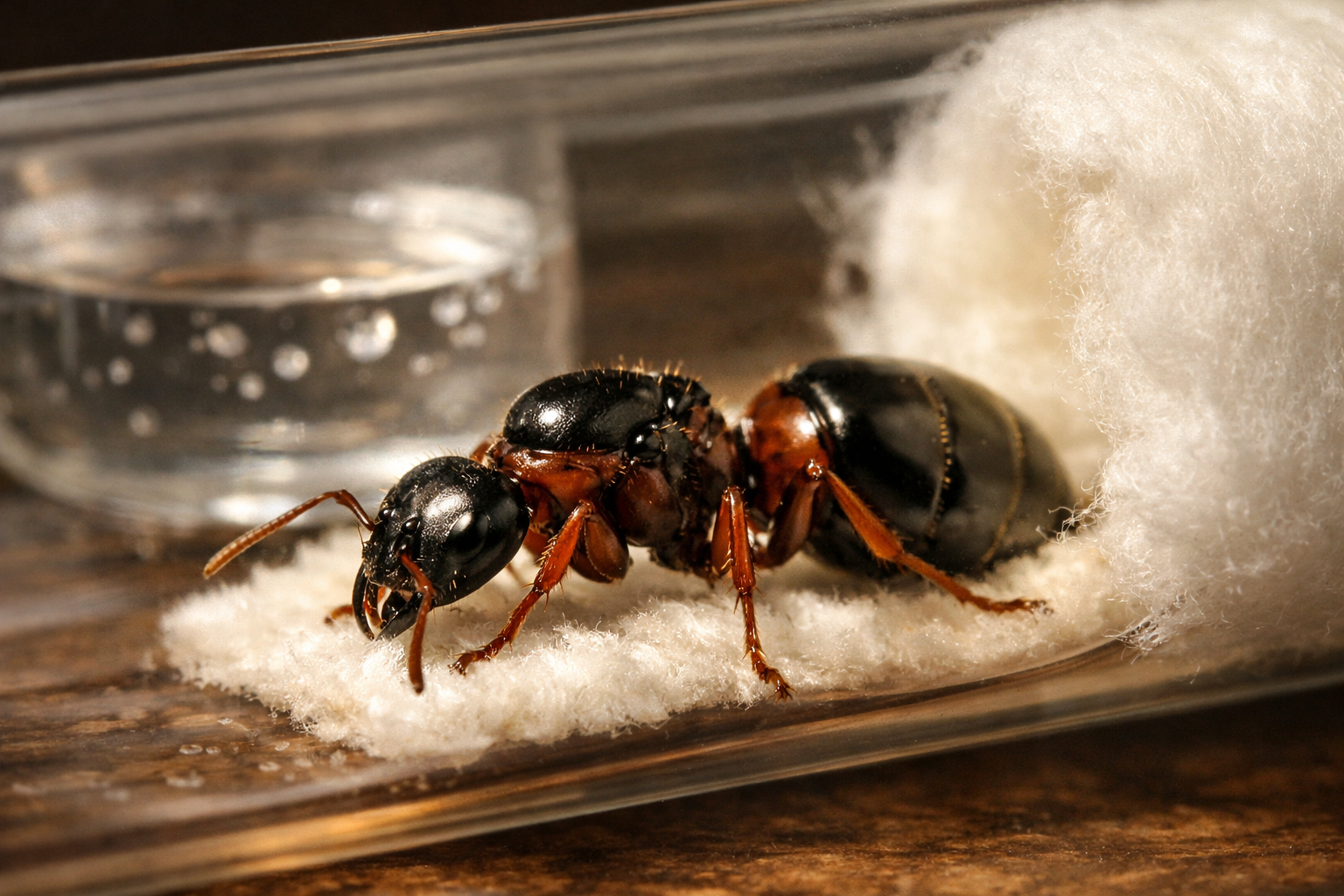
Every wildly successful colony begins with rock-solid founding conditions. The test tube setup for queen ants remains the undisputed gold standard because it perfectly mimics natural conditions while allowing easy monitoring without disturbing your precious queen.
Here's the battle-tested setup process that works every time:
- Fill a test tube 2/3 with clean water
- Plug with cotton or PVA sponge, leaving no air gaps if possible
- Gently add the queen to the air space
- Plug the opening securely with cotton
- Place in a dark, warm, quiet location completely free of vibrations and disturbances
Our Test Tube cabin 3X™ makes this process incredibly streamlined by providing a rock-solid, organized system for housing multiple test tube setups. Many beginners drastically underestimate how long founding takes—most species require 6-8 weeks before you'll see those first magical workers appear.
Temperature stability matters infinitely more than achieving perfect temperatures. A rock-steady 72°F on the low end with a pinpoint tiny spot of mid-to-low 80s°F absolutely destroys fluctuating between 68-80°F daily. Resist that overwhelming urge to check on your queen constantly—founding queens desperately need peace and darkness to work their magic.
## Setting Up Your First Formicarium: Where Dreams Come Alive
Once your colony explodes to 15-20 workers, it's time to consider a proper formicarium! But here's the exciting part—all three of our current flagship nest designs can effortlessly raise a colony from a single mated queen with incredible ease. This is something NO other nest on the US market can accomplish this efficiently with such minimal maintenance required.
Formicarium humidity levels cause more devastating colony deaths than any other factor—period. Most beginners either catastrophically over-humidify (leading to deadly mold) or dangerously under-humidify (causing fatal dehydration). Aim for that sweet spot of 50-60% humidity in some nest areas, while maintaining lower 20-30% humidity in other areas, with bone-dry outworlds at less than 10% humidity at all times.
Our revolutionary Antfarm Capsule™ eliminates virtually all the guesswork by providing built-in humidity control and perfect ventilation. Unlike those overwhelmingly complex multi-chamber systems, it delivers everything a thriving colony needs without drowning new keepers in confusion.
## Common Ant Keeping Mistakes That Destroy Dreams (And How to Crush Them)
Protein Overfeeding catastrophe: New keepers can unintentionally provide way too much food, creating a nightmare of mold and pest invasions. Offer smaller amounts of food at first and gauge the amount of protein they can consume in 2-3 days .
Wrong nest materials disaster: Avoid gel-based farms like the plague—they completely lack proper ventilation and nutrition.
Disturbing founding queens: Checking on newly acquired queens daily creates devastating stress and obliterates founding success rates.
At AntopiaUSA, we've made these painful mistakes ourselves over the years, which is exactly why we're incredibly passionate about helping newcomers completely avoid them and achieve the success they deserve!
## Frequently Asked Questions
How long does it take to see the first ant workers in a new colony?
Most species take 6-10 weeks from egg to first worker, depending on temperature, species, and protein consumption. Carpenter ants often take longer, while some smaller species develop much faster.
What humidity level should I maintain in my ant farm setup?
Maintain 50-60% humidity in some nest areas and 10% humidity in foraging areas. The Antfarm Capsule™ handles this balance automatically for stress-free keeping.
Can I start ant keeping with a gel farm from the pet store?
Absolutely not! Gel farms lack proper nutrition and ventilation, leading to guaranteed colony death and failure.