
 Image 1 of 5
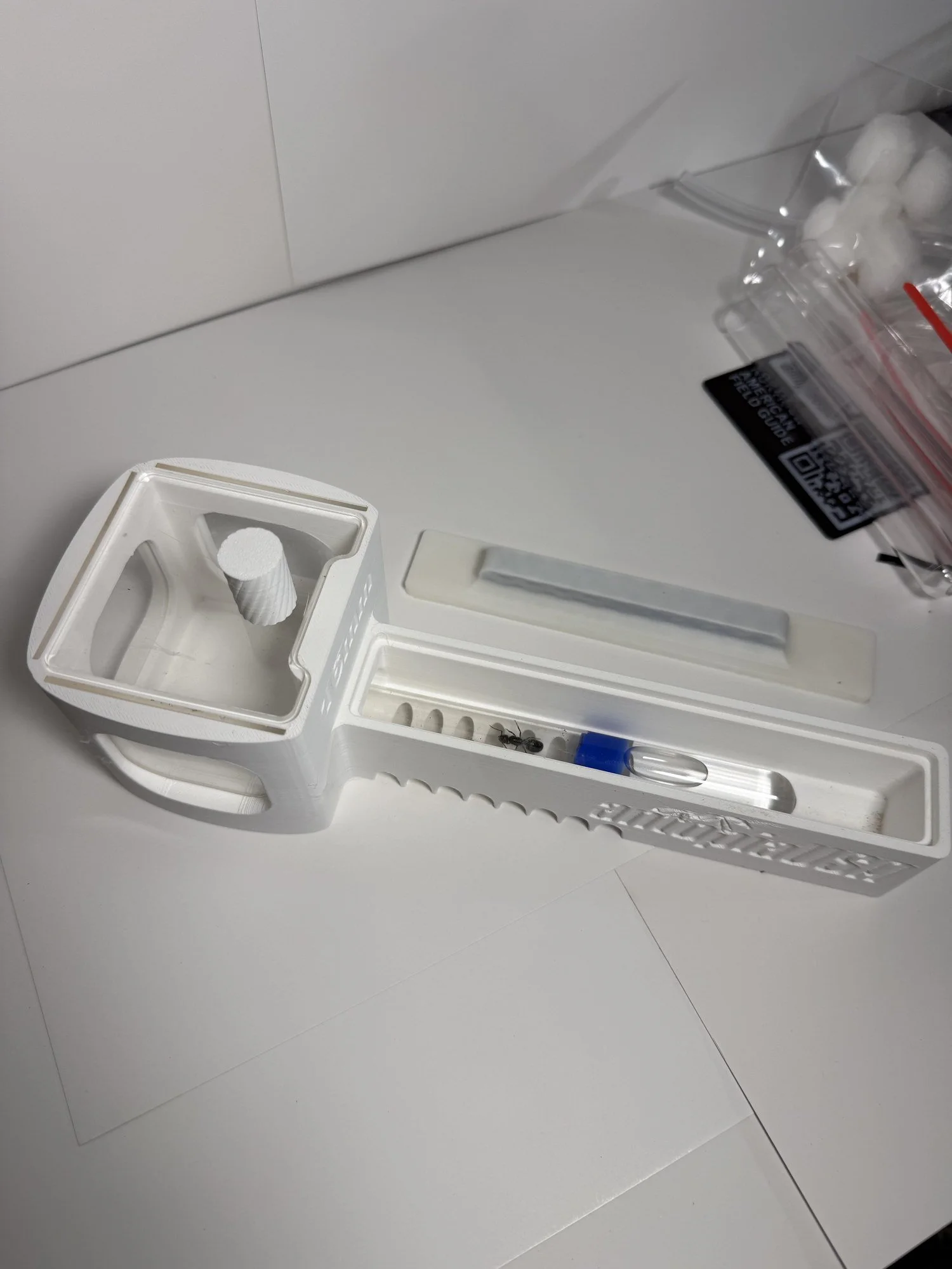 Image 2 of 5
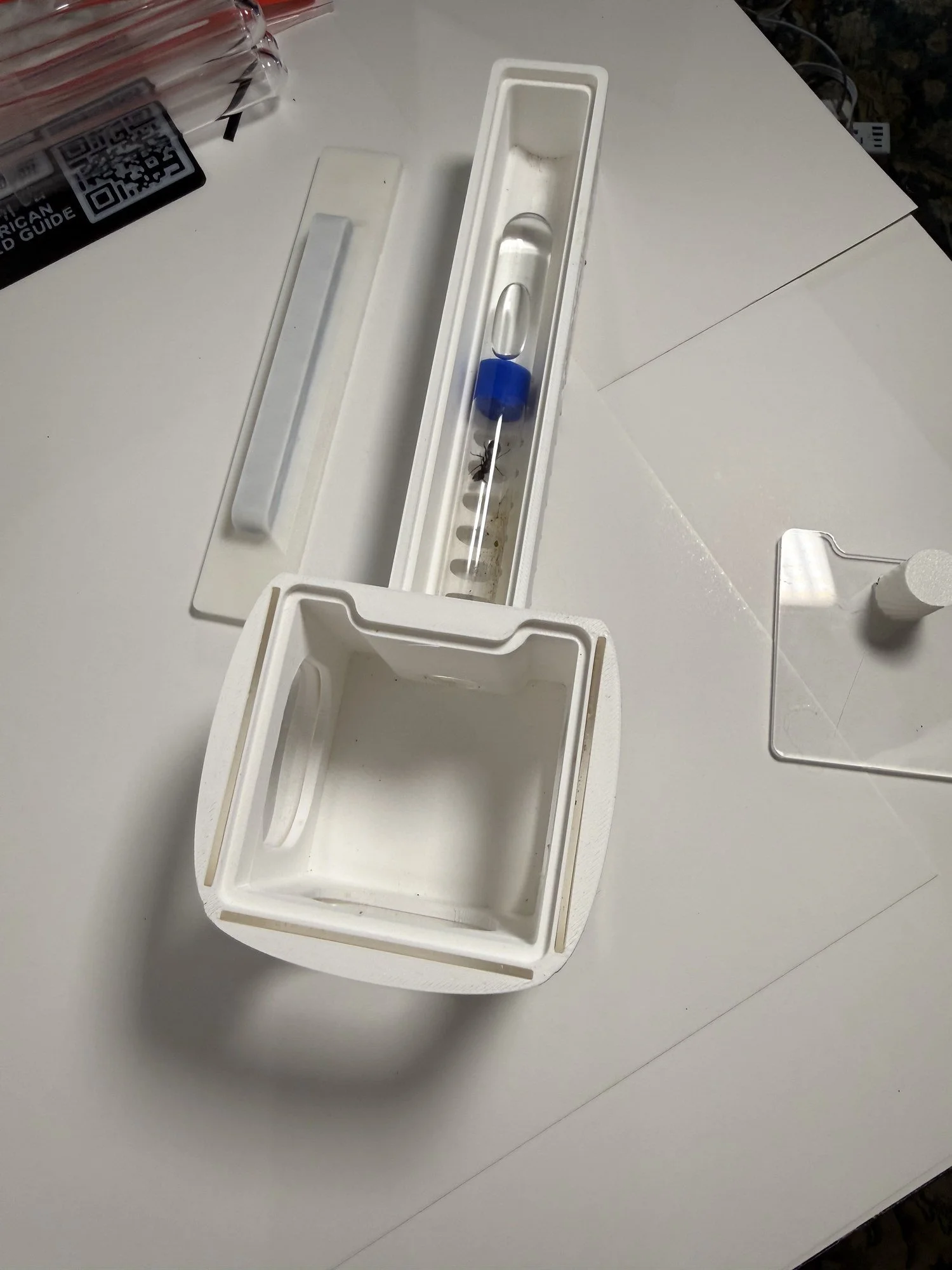 Image 3 of 5
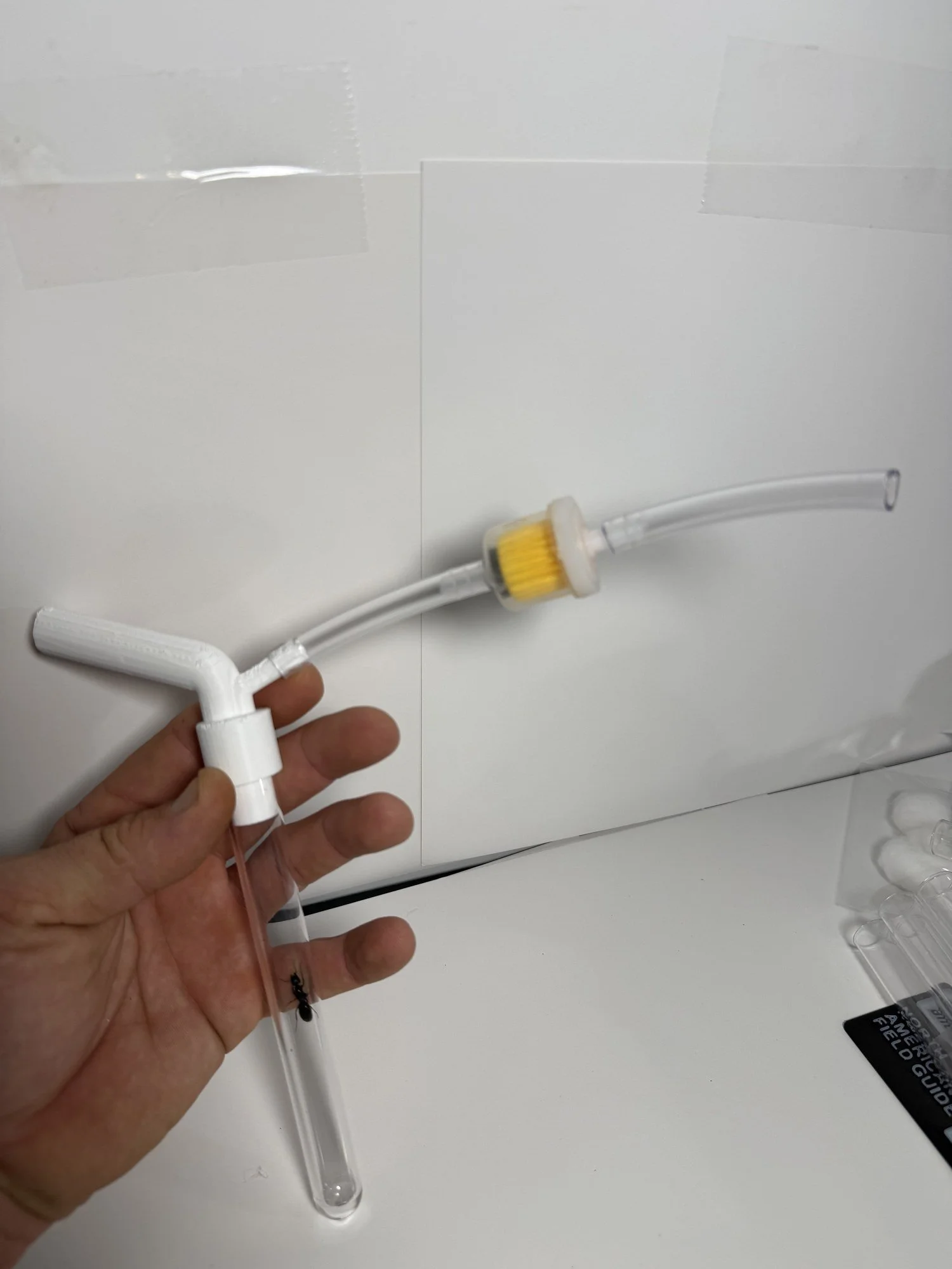 Image 4 of 5
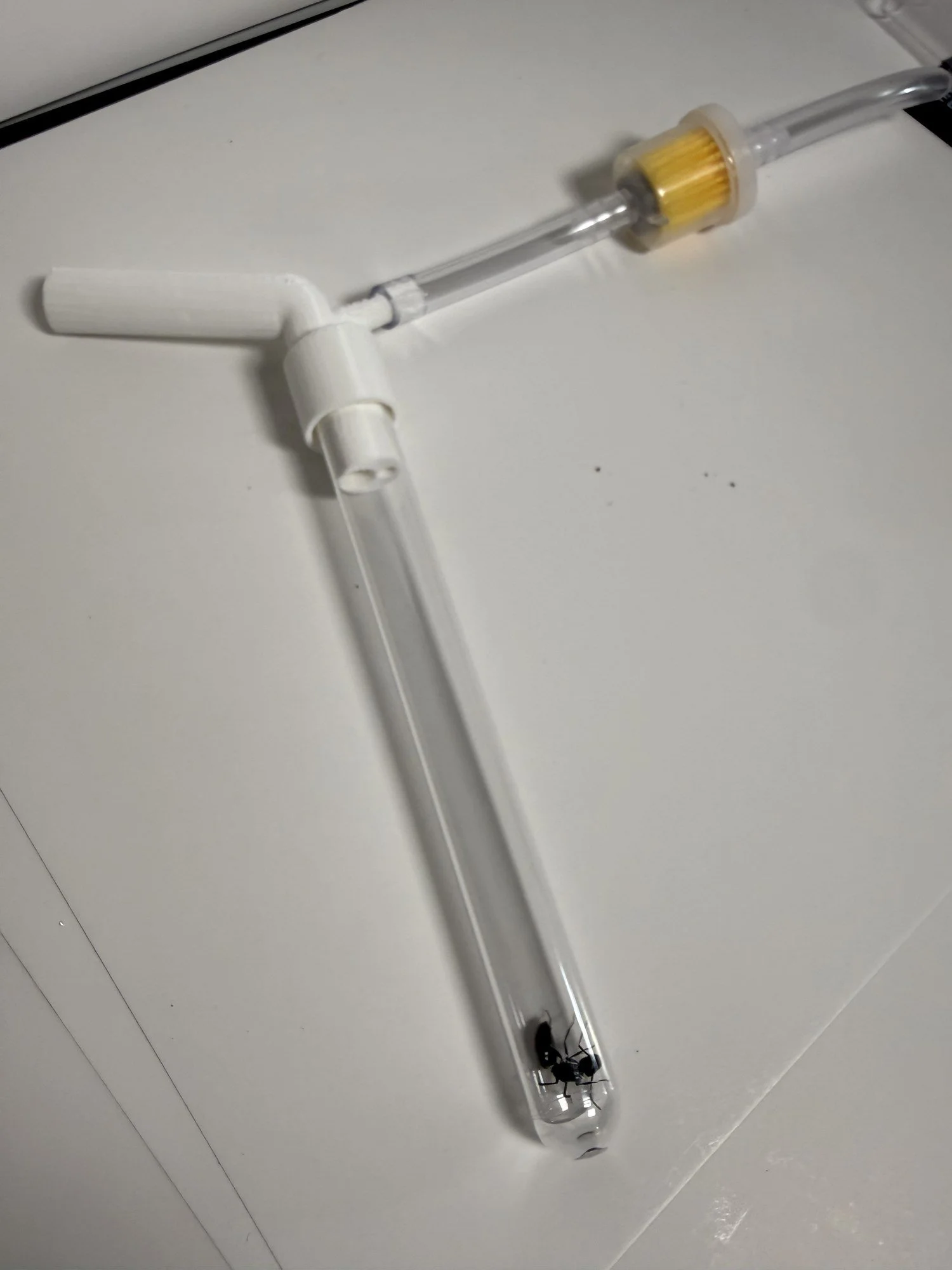 Image 5 of 5
Everything you need to start your ant keeping journey, in one box. The Ultimate Beginner's Ant Keeping & Catching Kit is the ant vacuum, the catch tubes, the test tube nest and the tools to go find a queen ant, catch her without touching her, and give her a safe, dark place to start a colony. Made by keepers, for keepers, and built for most North American species.
What is in the box?
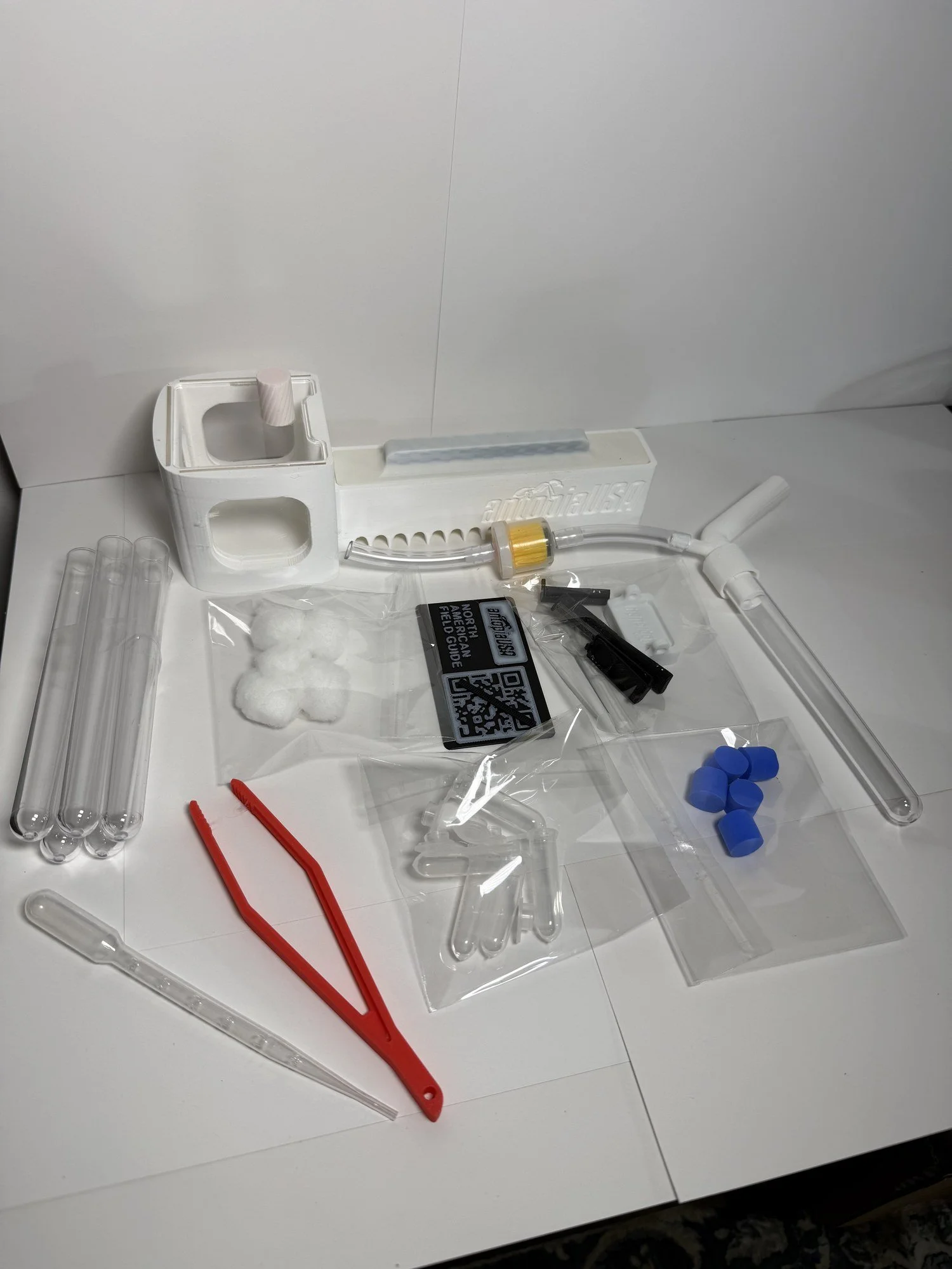
1 Test Tube Cabin Portal V5 nest, in red or white
1 AntopiaUSA Manual Ant Vacuum V2 with a built-in mesh screen, one test tube and about 10 inches of vinyl tubing
1 inline filter, already installed on the vacuum, for the species that spray formic acid
10 catch tubes (5 ml, snap cap)
5 test tubes, 16 x 150 mm
5 PVA sponges
5 pieces of cotton
1 set of feeding tweezers
1 large feeding dish
5 Test Tube Feeder Dish Slims, they fit any test tube 15 mm and up
1 3D-printed field guide card. Its QR code opens the AntopiaUSA North American Queen Ant Field Guide: Vern's own playbook, the things it took him years in the field to work out. When and where the queens fly, how he finds honeypot queens, how to tell a queen from a worker, and what to do in the first hour after the catch. Nobody else is going to hand you this.
What is not in the box?
No heat cable, no food, no live ants and no Fluon. This kit is built to go under the tree now and come out when the queens start flying a few months later. Fluon and the 90-day maintenance kit are on the site when you are ready for them.
What is the Test Tube Cabin Portal V5?
A nest for a test tube. The queen's tube plugs straight into it, the dark cover keeps her tube dark, and the 270-degree viewing window and clear lid let you watch the foraging area without disturbing a young, sensitive colony. The heat cable cutouts sit right under the parts of the tube you want warm and nowhere else. It takes 16 x 150 mm test tubes, it is lighter than the earlier Portals with better visibility of the feeding area, and the same tube plugs into a Desktop Ant Farm when the colony outgrows it.
How does the first weekend go?
Set the Portal up with the clear lid on top. Fill a test tube about one third with water and plug it with a PVA sponge. Take that tube and the vacuum out and go find a queen, using the field guide for when and where. Once she is in the tube, plug the open end with cotton. Back home, lift the dark cover and pop the tube into the Portal without opening anything. Leave the cotton in until the first workers arrive. Run a heat cable underneath, keep the cover on, and wait 45 to 60 days for workers.
What is the best time to go looking for queens?
It depends on the species and where you live, but any warm day after rain is a good start. The field guide covers the flight windows by group.
Can I find a whole colony with a queen instead?
Yes, but we do not recommend digging one out, for a lot of reasons. The guide explains why a freshly flown queen is the better catch.
Can I find more than one kind of queen in a day?
Yes. Many species fly inside the windows laid out in the field guide, and the 10 catch tubes are there for exactly that day.
A few of Vern's honeypot notes, to give you a taste of what is in the guide
Honeypot queens start flying early, late February into March in the warm parts of their range, and the season runs long because there are so many species. The yellow ones fly at night: look under lights at gas stations and libraries after a warm rain, with an adult along if you are under 18. Harvester queens fly in the warmest part of the day. Honeypots, carpenter ants and Formica spray formic acid when they are handled, which is why our vacuum ships with the inline filter already on it. Keep the winged queens and the wingless ones; there is no way to tell which are fertile until the eggs come. And never dig a queen out. Hurting her is the biggest risk you can take.
Will the ants climb out of the Portal?
Workers can climb smooth walls. Before the first workers arrive, run a band of Fluon around the top inch of the 270-degree viewing area. You keep almost all of the window and nothing climbs out while you change the feeding dish.
Does it come with live ants?
No. This is the kit for catching your own. If you would rather start with a queen and workers already going, our colonies ship with the queen included.
Who is it for?
Anyone starting out: the kid who picks up every bug in the yard, the parent buying the present, the teacher, or the keeper who wants a lighter all-in-one setup before a Desktop Ant Farm. Not recommended for children under 4.
Made in the USA. Ships Monday through Wednesday to every US state.